


Beaufort Castle and the Northern Border of the Promised Land
הרב שי טחןיז סיוון, תשפו02/06/2026The deeper message may be that when something truly belongs to a person, it naturally gravitates back to its rightful owner—but only after the owner demonstrates that he genuinely desires it
תגיות:הבופורלבנוןמלחמהמלחמת מצווה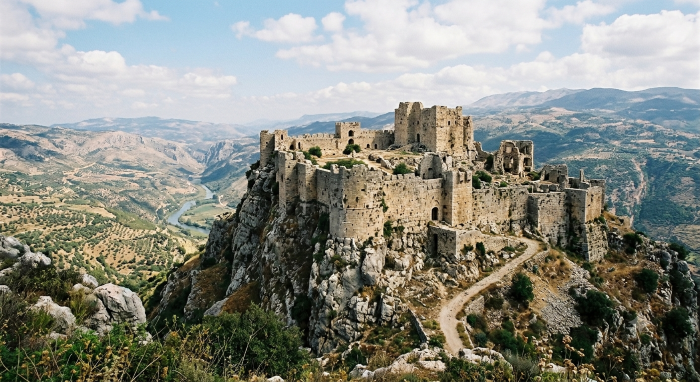
צילום: בינה מלאכותית
After the remarkable capture of Beaufort Castle in Lebanon—a symbolic stronghold long associated with Hezbollah—the bravery and determination of Israeli soldiers once again came into focus. Alongside the military achievement, an earlier discussion we wrote about during a previous escalation on the Lebanese front has resurfaced: how the Torah defines the northern boundary of Eretz Yisrael, and whether present-day Lebanon falls within that biblical framework.
While 44 years ago the battle for Beaufort Castle was fierce and costly, claiming the lives of many soldiers, this time the fortress was captured relatively quickly and with far less resistance. How can we understand this contrast?
In the past I suggested an explanation based on a well-known Rashi (Bereshit 28, 13). When Yaakov Avinu arrived at Har HaMoriah and went to sleep, Rashi explains that Hashem, so to speak, folded the entire Land of Israel beneath him. The purpose was to show Yaakov that the land would be inherited by his descendants with ease.
The deeper message may be that when something truly belongs to a person, it naturally gravitates back to its rightful owner—but only after the owner demonstrates that he genuinely desires it. The struggles and obstacles along the way may be real, yet ultimately the object seeks to return to where it belongs.
Perhaps the same idea can be applied here. Forty-four years ago, capturing Beaufort required a bitter and costly battle. Today, after decades of sacrifice, perseverance, and unwavering attachment to the Land of Israel, the same stronghold fell with remarkable speed. Perhaps this is because the Jewish people have
demonstrated, time and again, that they truly desire the land promised to them.
It may also reflect the unfolding process of the Geulah. As we have discussed in previous articles, the horn of Israel continues to rise, and the redemption advances step by step, sometimes in ways that become apparent only in hindsight.
Of course, we do not presume to know Hashem's calculations. Yet the image is striking. When a land has been promised by Hashem to the Jewish people, its ultimate destiny is to return to them. What once required immense effort may one day come with surprising ease, because, in a deeper sense, it is simply returning to its rightful owner.
Is Lebanon within Israel’s promised borders?
The Torah does not leave the borders of the Land of Israel undefined. In the covenant with Avraham Avinu, Hashem promises: “To your descendants I have given this land, from the river of Egypt until the great river, the Euphrates (Perat)” (Bereishit 15:18). This establishes a sweeping geographic vision of the promised land that extends far beyond the settled borders familiar from later Jewish history. The expansive region described in these pesukim reaches across parts of modern-day Israel, the West Bank, Gaza, Lebanon, Syria, Jordan, and Iraq, all the way to the Euphrates River, which flows through Turkey, Syria, and Iraq.
A fascinating Rashi on this pasuk notes that the Torah’s promise here refers to the inheritance of ten nations, whereas throughout history Bnei Yisrael has only conquered seven. From this its proven that the full realization of the promise was never meant to be completed in earlier generations, but is reserved for the future redemption, in the days of Mashiach, when the entire promised territory will ultimately be attained. Ohr Hachayim writes that this understanding should strengthen us in exile, reminding us that Hashem’s promise has not been exhausted, and that the complete fulfillment of the land’s boundaries will yet come.
His interpretation may be based on sources in the Yerushalmi (Kidushin 1, 8), which states that Hashem said to Israel: your forefathers conquered the land of seven nations, but you—in the future—will conquer the land of ten nations.
Another reference appears in Parshat Ekev, where the Torah describes the territory that will be given to Israel in conquest: “Every place upon which the sole of your foot shall tread shall be yours—from the wilderness and Lebanon, and from the river, the Euphrates River, until the western sea shall be your boundary” (Devarim 11:24). Here, Lebanon is not merely implied but explicitly named as part of the northern direction of expansion described by the Torah.
A further indication is found in the very beginning of Sefer Yehoshua (1:3–4): “Every place on which the soles of your feet will tread I have given to you, as I have spoken to Moshe. From this desert and Lebanon to the great river, the Euphrates, all the land of the Hittites to the great sea westward shall be your boundary.”
The inheritance of Shevet Asher extends along the northern coastal region, including areas adjacent to what is today southern Lebanon. Cities such as Akko and the regions north of Mount Carmel reflect how the biblical settlement naturally stretches toward that northern axis. The repetition of this formulation reinforces that the northern boundary described in the Torah continues into the era of entry into the land under Yehoshua.
When these sources are viewed together, a consistent picture emerges: the Torah describes a far broader conception of Eretz Yisrael than the borders most commonly associated with the modern State of Israel. Lebanon appears in the Torah’s language as part of the northern directional boundary of that promised land, and is treated by several classical sources as falling within that biblical scope.
From the river to the sea
Geographically, this becomes even more striking when considering the river identified with the biblical Perat—the Euphrates—which flows through modern-day Turkey, Syria, and Iraq before continuing toward the Persian Gulf. The Torah’s description of the land thus spans a vast territory that extends far beyond its commonly perceived dimensions.
While the practical realization of these borders is a subject of its own discussion, the Torah’s language presents a clear and expansive vision of the land promised to Avraham and his descendants, in which Lebanon occupies a significant place within the northern boundary descriptions.
The Northern Front: A Milchemet Mitzvah?
Within Chazal and the Rishonim, these pesukim are not treated merely as poetic language. The Ramban, in his commentary to Parshat Ekev (Devarim 11:24), understands these descriptions as defining the scope of the biblical inheritance promised to the Jewish people. According to his approach, Lebanon is included within the territory that Hashem commanded Israel to conquer. He distinguishes it from regions such as Syria, whose conquest is classified as a milchemet reshut (a discretionary war). Lebanon, by contrast, falls within the borders promised by Hashem and is therefore included in the obligation of conquest, giving it the status of a milchemet mitzvah.
Also the Rambam (Hilchot Melachim, chapter 5) explains that a war fought to conquer the Land of Israel within the borders promised by Hashem is classified as a milchemet mitzvah—a commanded war. This designation reflects the unique status of the land and the obligation to establish Jewish sovereignty over the territory that Hashem assigned to the Jewish people.
The events unfolding—remarkable on both a historical and biblical scale—may be understood by many as an indication that the process of Geulah is advancing with increasing momentum. We can only pray that this continues, and that our soldiers and the entire nation should remain safe and well.
While 44 years ago the battle for Beaufort Castle was fierce and
צילום: בינה מלאכותית
In the past I suggested an explanation based on a well-known Rashi (Bereshit 28, 13). When Yaakov Avinu arrived at Har HaMoriah and went to sleep, Rashi explains that Hashem, so to speak, folded the entire Land of Israel beneath him. The purpose was to show Yaakov that the land would be inherited by his descendants with ease.
The deeper message may be that when something truly belongs to a person, it naturally gravitates back to its rightful owner—but only after the owner demonstrates that he genuinely desires it. The struggles and obstacles along the way may be real, yet ultimately the object seeks to return to where it belongs.
Perhaps the same idea can be applied here. Forty-four years ago, capturing Beaufort required a bitter and costly battle. Today, after decades of sacrifice, perseverance, and unwavering attachment to the Land of Israel, the same stronghold fell with remarkable speed. Perhaps this is because the Jewish people have
demonstrated, time and again, that they truly desire the land promised to them.
It may also reflect the unfolding process of the Geulah. As we have discussed in previous articles, the horn of Israel continues to rise, and the redemption advances step by step, sometimes in ways that become apparent only in hindsight.
Of course, we do not presume to know Hashem's calculations. Yet the image is striking. When a land has been promised by Hashem to the Jewish people, its ultimate destiny is to return to them. What once required immense effort may one day come with surprising ease, because, in a deeper sense, it is simply returning to its rightful owner.
Is Lebanon within Israel’s promised borders?
The Torah does not leave the borders of the Land of Israel undefined. In the covenant with Avraham Avinu, Hashem promises: “To your descendants I have given this land, from the river of Egypt until the great river, the Euphrates (Perat)” (Bereishit 15:18). This establishes a sweeping geographic vision of the promised land that extends far beyond the settled borders familiar from later Jewish history. The expansive region described in these pesukim reaches across parts of modern-day Israel, the West Bank, Gaza, Lebanon, Syria, Jordan, and Iraq, all the way to the Euphrates River, which flows through Turkey, Syria, and Iraq.
A fascinating Rashi on this pasuk notes that the Torah’s promise here refers to the inheritance of ten nations, whereas throughout history Bnei Yisrael has only conquered seven. From this its proven that the full realization of the promise was never meant to be completed in earlier generations, but is reserved for the future redemption, in the days of Mashiach, when the entire promised territory will ultimately be attained. Ohr Hachayim writes that this understanding should strengthen us in exile, reminding us that Hashem’s promise has not been exhausted, and that the complete fulfillment of the land’s boundaries will yet come.
His interpretation may be based on sources in the Yerushalmi (Kidushin 1, 8), which states that Hashem said to Israel: your forefathers conquered the land of seven nations, but you—in the future—will conquer the land of ten nations.
Another reference appears in Parshat Ekev, where the Torah describes the territory that will be given to Israel in conquest: “Every place upon which the sole of your foot shall tread shall be yours—from the wilderness and Lebanon, and from the river, the Euphrates River, until the western sea shall be your boundary” (Devarim 11:24). Here, Lebanon is not merely implied but explicitly named as part of the northern direction of expansion described by the Torah.
A further indication is found in the very beginning of Sefer Yehoshua (1:3–4): “Every place on which the soles of your feet will tread I have given to you, as I have spoken to Moshe. From this desert and Lebanon to the great river, the Euphrates, all the land of the Hittites to the great sea westward shall be your boundary.”
The inheritance of Shevet Asher extends along the northern coastal region, including areas adjacent to what is today southern Lebanon. Cities such as Akko and the regions north of Mount Carmel reflect how the biblical settlement naturally stretches toward that northern axis. The repetition of this formulation reinforces that the northern boundary described in the Torah continues into the era of entry into the land under Yehoshua.
When these sources are viewed together, a consistent picture emerges: the Torah describes a far broader conception of Eretz Yisrael than the borders most commonly associated with the modern State of Israel. Lebanon appears in the Torah’s language as part of the northern directional boundary of that promised land, and is treated by several classical sources as falling within that biblical scope.
From the river to the sea
Geographically, this becomes even more striking when considering the river identified with the biblical Perat—the Euphrates—which flows through modern-day Turkey, Syria, and Iraq before continuing toward the Persian Gulf. The Torah’s description of the land thus spans a vast territory that extends far beyond its commonly perceived dimensions.
While the practical realization of these borders is a subject of its own discussion, the Torah’s language presents a clear and expansive vision of the land promised to Avraham and his descendants, in which Lebanon occupies a significant place within the northern boundary descriptions.
The Northern Front: A Milchemet Mitzvah?
Within Chazal and the Rishonim, these pesukim are not treated merely as poetic language. The Ramban, in his commentary to Parshat Ekev (Devarim 11:24), understands these descriptions as defining the scope of the biblical inheritance promised to the Jewish people. According to his approach, Lebanon is included within the territory that Hashem commanded Israel to conquer. He distinguishes it from regions such as Syria, whose conquest is classified as a milchemet reshut (a discretionary war). Lebanon, by contrast, falls within the borders promised by Hashem and is therefore included in the obligation of conquest, giving it the status of a milchemet mitzvah.
Also the Rambam (Hilchot Melachim, chapter 5) explains that a war fought to conquer the Land of Israel within the borders promised by Hashem is classified as a milchemet mitzvah—a commanded war. This designation reflects the unique status of the land and the obligation to establish Jewish sovereignty over the territory that Hashem assigned to the Jewish people.
The events unfolding—remarkable on both a historical and biblical scale—may be understood by many as an indication that the process of Geulah is advancing with increasing momentum. We can only pray that this continues, and that our soldiers and the entire nation should remain safe and well.






הוסף תגובה
עוד מהרב שי טחן
עוד בנושא פוליטיקה